


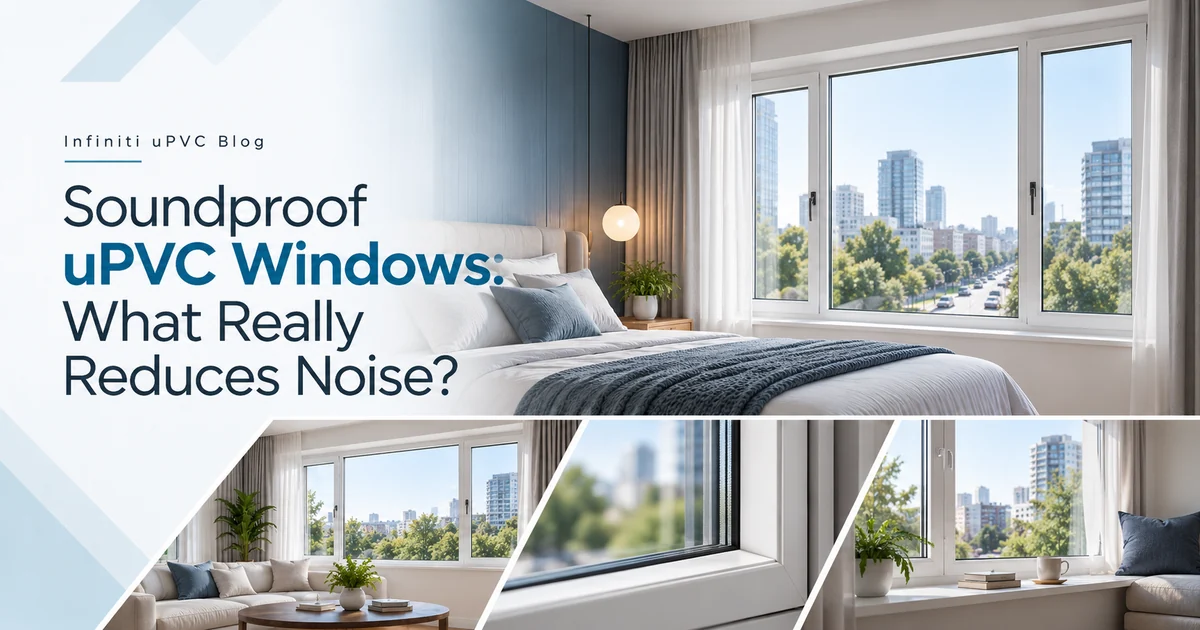
Can uPVC windows reduce traffic noise? Understand glazing, seals, frame design, installation and what to ask before buying windows for quieter rooms.
Can uPVC windows make a room quieter?
A well-specified window system can reduce the amount of outdoor sound entering a room, but no ordinary window makes a room completely soundproof. Results depend on the glass, seals, frames, wall construction, ventilation openings and quality of installation.
The glass unit matters
Acoustic performance is influenced by pane thickness, the space between panes and the use of laminated acoustic glass where suitable. Double glazing is not automatically the best option for every frequency of sound. Ask for tested acoustic ratings of the whole proposed window assembly, not simply a claim about uPVC.
Air leaks undermine sound insulation
Even a small gap around a sash, gasket or frame can let in noise. Check closing pressure, weather seals and the perimeter joint between the frame and masonry. Sliding and casement designs can differ in sealing arrangements; performance should be compared through test evidence.
What to consider beside the window
Street-facing bedrooms, schools and offices have different noise sources and comfort expectations. Walls, doors, vents and open windows also influence the final result. Plan how the room will be ventilated when the windows are closed.
Questions to ask the supplier
What acoustic test result applies to the complete system? Which glazing configuration was tested? How will perimeter gaps be sealed? What maintenance is needed to keep gaskets working? Infiniti uPVC can review the room and opening requirements to help select an appropriate configuration.
In-depth guide to soundproof uPVC windows
How to evaluate the options
A quiet room depends on more than a pane of glass. Traffic, voices and construction have different sound profiles. Describe the actual noise source, time and room use before requesting an acoustic glazing option. Windows reduce sound transmission; they cannot make a room completely soundproof. Start by recording your project goals and the location where the product will be used. Compare actual dimensions and available finishes before making design decisions. Keep a written record of the options that were ruled out and why. This makes later changes easier to review with suppliers and contractors.
Where design meets site requirements
Glass thickness, laminate construction, pane spacing and the complete frame design affect acoustic results. Double glazing does not guarantee the best performance at every sound frequency. Request testing for the same configuration you intend to install. Consider who will use the space, who will maintain the installation and whether equipment or windows will need to open. Review access, drainage and nearby building elements at an early stage. A design that performs well in a rendering may still be impractical on site if these considerations are missing.
Technical performance and installation
Small leaks around gaskets, vents, frames or surrounding plaster can undermine the benefit of better glass. Inspect perimeter sealing and discuss how the room will be ventilated. Maintenance keeps seals and moving parts operating as designed. The installer should work from verified dimensions and approved details. Agree on inspection points, tolerances and handover information. If the proposed installation changes during construction, have the design team check the impact rather than assuming the original specification still applies.
Getting better value over the product life
For soundproof uPVC windows, total value depends on specification quality, installation, availability of service and the care required over time. Compare complete proposals: materials, relevant accessories, supporting components, labour, site finishing and warranty scope. The lowest initial quotation may exclude important work. Make a checklist of what is included and what is not.
Five decisions to make before ordering
- Define the main purpose and functional requirements for the specific location.
- Choose a suitable profile or opening configuration and review a physical sample.
- Request current technical information and identify the applicable safety and building requirements.
- Verify site dimensions, installation method, supports, access and finishing responsibilities.
- Confirm the complete quotation, warranty terms, cleaning guidance and after-sales support.
Comparison table: options and considerations
| Option | Typical value | What to check |
|---|---|---|
| Glass composition | Acoustic attenuation | Check whole-system tests |
| Perimeter seals | Limit leakage | Inspect installed joints |
| Window operation | Ventilation and comfort | Review usage and maintenance |
Expert takeaway: A well-considered specification balances architectural appearance with safety, verified performance, installation detail and future maintenance. Choose the complete solution, not only the visible component.
Frequently asked questions
What should I ask a supplier about soundproof uPVC windows?
Request product drawings, available styles or finishes, current technical information, installation guidance and written warranty terms. Be specific about where and how the product will be used.
Can one specification be used for every building?
No. Exposure, opening dimensions, local requirements, supports and practical use vary. Confirm the suitability of every installation before ordering.
How can I compare two quotations fairly?
Provide both suppliers the same drawings, quantities, quality requirements, accessories and scope of installation. Check exclusions and the service commitment as well as price.
Are photographs enough to choose the right product?
Photographs help with appearance, but samples, scaled drawings and documented technical information are needed for a reliable specification.
What should I check after installation?
Review alignment, accessibility, safe operation where applicable, finishing and the manufacturer’s maintenance instructions. Record any issues during handover.
Can existing installations be upgraded later?
Changes may be possible but depend on the structure, existing dimensions, fixings and compatibility. Seek a site-specific assessment before modifying them.
Conclusion
When assessing soundproof uPVC windows, look at the whole project rather than making a decision on appearance alone. A clear brief, realistic comparison and coordinated installation details provide a more useful basis for choosing products. For options relevant to your project, contact Infiniti uPVC and request up-to-date technical guidance.
