


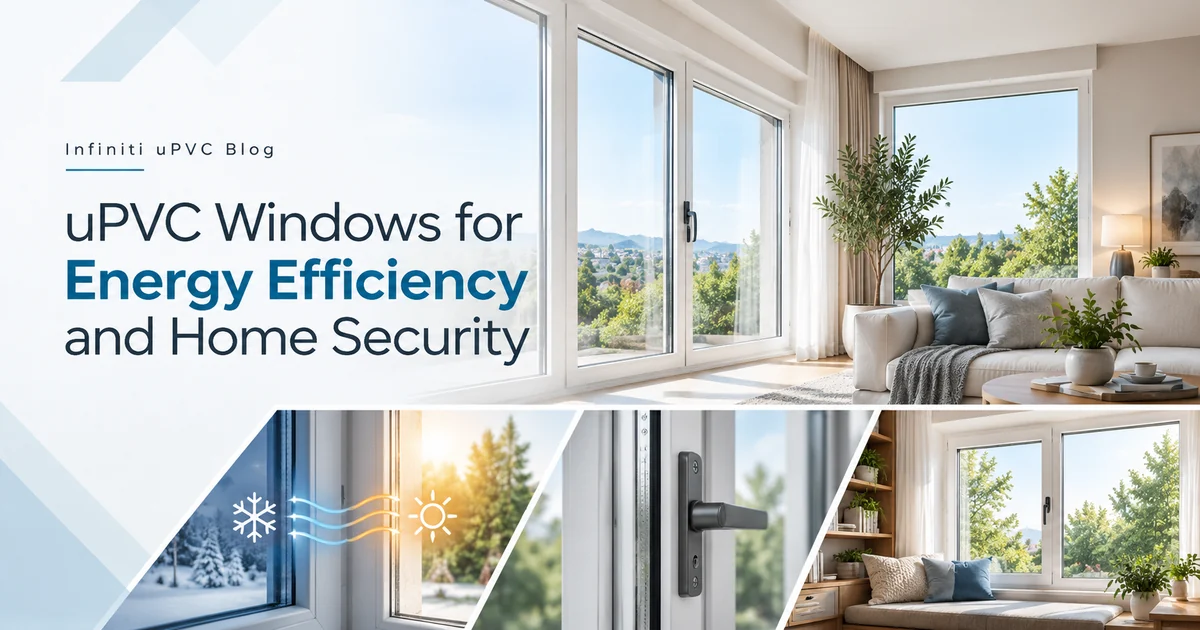
Explore how uPVC window frames, glazing, seals and locking hardware contribute to thermal comfort, security and low-maintenance living.
Energy efficiency is a system decision
uPVC frames can help limit heat transfer, but real-world thermal performance also depends on glazing, frame design, airtightness, installation and the building’s climate and orientation. Evaluate the complete window, not a single component.
Glazing and solar control
Double-glazed units, low-emissivity coatings and appropriate glass configurations can influence insulation and solar heat gain. On a west-facing room, controlling afternoon heat may be more important than maximising sunlight. Compare suitable products using documented U-values and solar performance data when available.
Security depends on multiple parts
Locks, reinforced profiles where specified, quality hardware, glazing choice and secure fixing into the wall all matter. Multi-point locks can improve resistance to forced opening, but overall protection depends on correct specification and installation. Ask for tested hardware and system details.
Comfort and maintenance
Proper sealing can reduce drafts, outdoor dust and water infiltration under appropriate conditions. Keep tracks and drainage channels clear, clean frames with mild detergent and check seals and hardware periodically. Never block intended drainage paths.
Questions for your project
Request the window’s complete specification, safety glazing requirements, operating style, warranty coverage and installation scope. Infiniti uPVC offers window solutions to discuss with homeowners, architects and project teams; compare options against actual site needs.
In-depth guide to energy-efficient uPVC windows
How to evaluate the options
The frame, glazing, spacers, gaskets and fitting all affect thermal performance. A frame material alone cannot establish how much energy a home will save. Orientation, sun exposure and the cooling needs of the building should inform the glass specification. Start by recording your project goals and the location where the product will be used. Compare actual dimensions and available finishes before making design decisions. Keep a written record of the options that were ruled out and why. This makes later changes easier to review with suppliers and contractors.
Where design meets site requirements
Low-emissivity or solar-control glazing may help manage heat depending on the orientation and climate. Double glazing is one option, but compare documented whole-window values and real installation details rather than general savings promises. Consider who will use the space, who will maintain the installation and whether equipment or windows will need to open. Review access, drainage and nearby building elements at an early stage. A design that performs well in a rendering may still be impractical on site if these considerations are missing.
Technical performance and installation
A secure system combines appropriate locking hardware, safe glazing, sound anchoring and correct installation. Multi-point locks are only one component. Ask for available tests and choose based on the room’s security and safety requirements. The installer should work from verified dimensions and approved details. Agree on inspection points, tolerances and handover information. If the proposed installation changes during construction, have the design team check the impact rather than assuming the original specification still applies.
Getting better value over the product life
For energy-efficient uPVC windows, total value depends on specification quality, installation, availability of service and the care required over time. Compare complete proposals: materials, relevant accessories, supporting components, labour, site finishing and warranty scope. The lowest initial quotation may exclude important work. Make a checklist of what is included and what is not.
Five decisions to make before ordering
- Define the main purpose and functional requirements for the specific location.
- Choose a suitable profile or opening configuration and review a physical sample.
- Request current technical information and identify the applicable safety and building requirements.
- Verify site dimensions, installation method, supports, access and finishing responsibilities.
- Confirm the complete quotation, warranty terms, cleaning guidance and after-sales support.
Comparison table: options and considerations
| Option | Typical value | What to check |
|---|---|---|
| Glazing | Insulation and solar control | Ask for relevant ratings |
| Gaskets | Air and water sealing | Inspect installation |
| Hardware | Closing and security | Check entire assembly |
Expert takeaway: A well-considered specification balances architectural appearance with safety, verified performance, installation detail and future maintenance. Choose the complete solution, not only the visible component.
Frequently asked questions
What should I ask a supplier about energy-efficient uPVC windows?
Request product drawings, available styles or finishes, current technical information, installation guidance and written warranty terms. Be specific about where and how the product will be used.
Can one specification be used for every building?
No. Exposure, opening dimensions, local requirements, supports and practical use vary. Confirm the suitability of every installation before ordering.
How can I compare two quotations fairly?
Provide both suppliers the same drawings, quantities, quality requirements, accessories and scope of installation. Check exclusions and the service commitment as well as price.
Are photographs enough to choose the right product?
Photographs help with appearance, but samples, scaled drawings and documented technical information are needed for a reliable specification.
What should I check after installation?
Review alignment, accessibility, safe operation where applicable, finishing and the manufacturer’s maintenance instructions. Record any issues during handover.
Can existing installations be upgraded later?
Changes may be possible but depend on the structure, existing dimensions, fixings and compatibility. Seek a site-specific assessment before modifying them.
Conclusion
When assessing energy-efficient uPVC windows, look at the whole project rather than making a decision on appearance alone. A clear brief, realistic comparison and coordinated installation details provide a more useful basis for choosing products. For options relevant to your project, contact Infiniti uPVC and request up-to-date technical guidance.
