


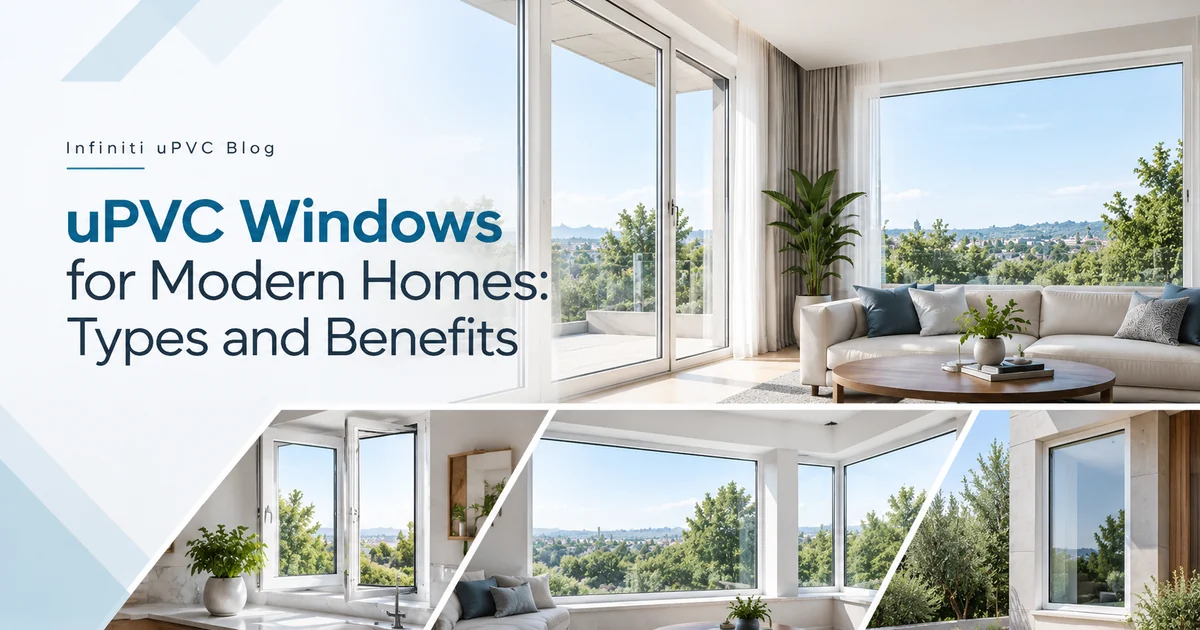
A practical introduction to uPVC windows for modern homes: compare sliding, casement and fixed windows, design flexibility, upkeep and buying questions.
Why homeowners consider uPVC
uPVC window systems are often chosen for their clean appearance, low routine maintenance and compatibility with a range of opening styles. Whether those advantages translate into a comfortable home depends on the specification, glazing and installation.
Common styles for contemporary spaces
Sliding windows can suit compact balconies and apartments. Casement windows provide outward opening where clearance permits. Fixed windows frame views and admit light without ventilation. Combination configurations can balance daylight with operable sections. Choose based on the actual opening, furniture layout and safety requirements.
Design beyond the frame colour
Look at sightlines, frame proportions, the amount of visible glass and how the windows relate to the façade. Consider privacy, insect screens, child safety, cleaning access and curtain placement. Matching every room with the same design is not always the most functional choice.
Performance questions worth asking
Check the glazing specification, water resistance, air leakage, hardware, thermal performance and acoustic performance where relevant. Request evidence tied to the proposed configuration. Avoid assuming all uPVC products perform identically.
Planning and ownership
Accurate site measurements and properly detailed installation are essential. Confirm lead times, service support and written warranty exclusions. A good supplier should help translate the design brief into a buildable window schedule. Infiniti uPVC can be considered as part of that comparison.
In-depth guide to uPVC windows for modern homes
How to evaluate the options
Sliding windows can suit compact spaces; casement windows suit rooms where an opening sash has clearance; fixed glazing emphasizes daylight and views but provides no ventilation. Choose separately for bedrooms, kitchens, bathrooms and living rooms rather than defaulting to one format. Start by recording your project goals and the location where the product will be used. Compare actual dimensions and available finishes before making design decisions. Keep a written record of the options that were ruled out and why. This makes later changes easier to review with suppliers and contractors.
Where design meets site requirements
The glazing specification influences heat, sunlight, acoustics and safety. Toughened or laminated glass may be required in specific positions. Ask for performance evidence for the full window assembly, including frame, glass, gaskets and hardware. Consider who will use the space, who will maintain the installation and whether equipment or windows will need to open. Review access, drainage and nearby building elements at an early stage. A design that performs well in a rendering may still be impractical on site if these considerations are missing.
Technical performance and installation
Good measurement and installation protect the value of the purchase. Clarify drainage, perimeter sealing, maintenance access and warranty coverage. Compare complete supply-and-install quotations rather than looking only at the price per square foot. The installer should work from verified dimensions and approved details. Agree on inspection points, tolerances and handover information. If the proposed installation changes during construction, have the design team check the impact rather than assuming the original specification still applies.
Getting better value over the product life
For uPVC windows for modern homes, total value depends on specification quality, installation, availability of service and the care required over time. Compare complete proposals: materials, relevant accessories, supporting components, labour, site finishing and warranty scope. The lowest initial quotation may exclude important work. Make a checklist of what is included and what is not.
Five decisions to make before ordering
- Define the main purpose and functional requirements for the specific location.
- Choose a suitable profile or opening configuration and review a physical sample.
- Request current technical information and identify the applicable safety and building requirements.
- Verify site dimensions, installation method, supports, access and finishing responsibilities.
- Confirm the complete quotation, warranty terms, cleaning guidance and after-sales support.
Comparison table: options and considerations
| Option | Typical value | What to check |
|---|---|---|
| Sliding window | No projecting sash | Maintain tracks and seals |
| Casement window | Operable ventilation | Check clearance |
| Fixed window | Uninterrupted view | No opening for airflow |
Expert takeaway: A well-considered specification balances architectural appearance with safety, verified performance, installation detail and future maintenance. Choose the complete solution, not only the visible component.
Frequently asked questions
What should I ask a supplier about uPVC windows for modern homes?
Request product drawings, available styles or finishes, current technical information, installation guidance and written warranty terms. Be specific about where and how the product will be used.
Can one specification be used for every building?
No. Exposure, opening dimensions, local requirements, supports and practical use vary. Confirm the suitability of every installation before ordering.
How can I compare two quotations fairly?
Provide both suppliers the same drawings, quantities, quality requirements, accessories and scope of installation. Check exclusions and the service commitment as well as price.
Are photographs enough to choose the right product?
Photographs help with appearance, but samples, scaled drawings and documented technical information are needed for a reliable specification.
What should I check after installation?
Review alignment, accessibility, safe operation where applicable, finishing and the manufacturer’s maintenance instructions. Record any issues during handover.
Can existing installations be upgraded later?
Changes may be possible but depend on the structure, existing dimensions, fixings and compatibility. Seek a site-specific assessment before modifying them.
Conclusion
When assessing uPVC windows for modern homes, look at the whole project rather than making a decision on appearance alone. A clear brief, realistic comparison and coordinated installation details provide a more useful basis for choosing products. For options relevant to your project, contact Infiniti uPVC and request up-to-date technical guidance.
